
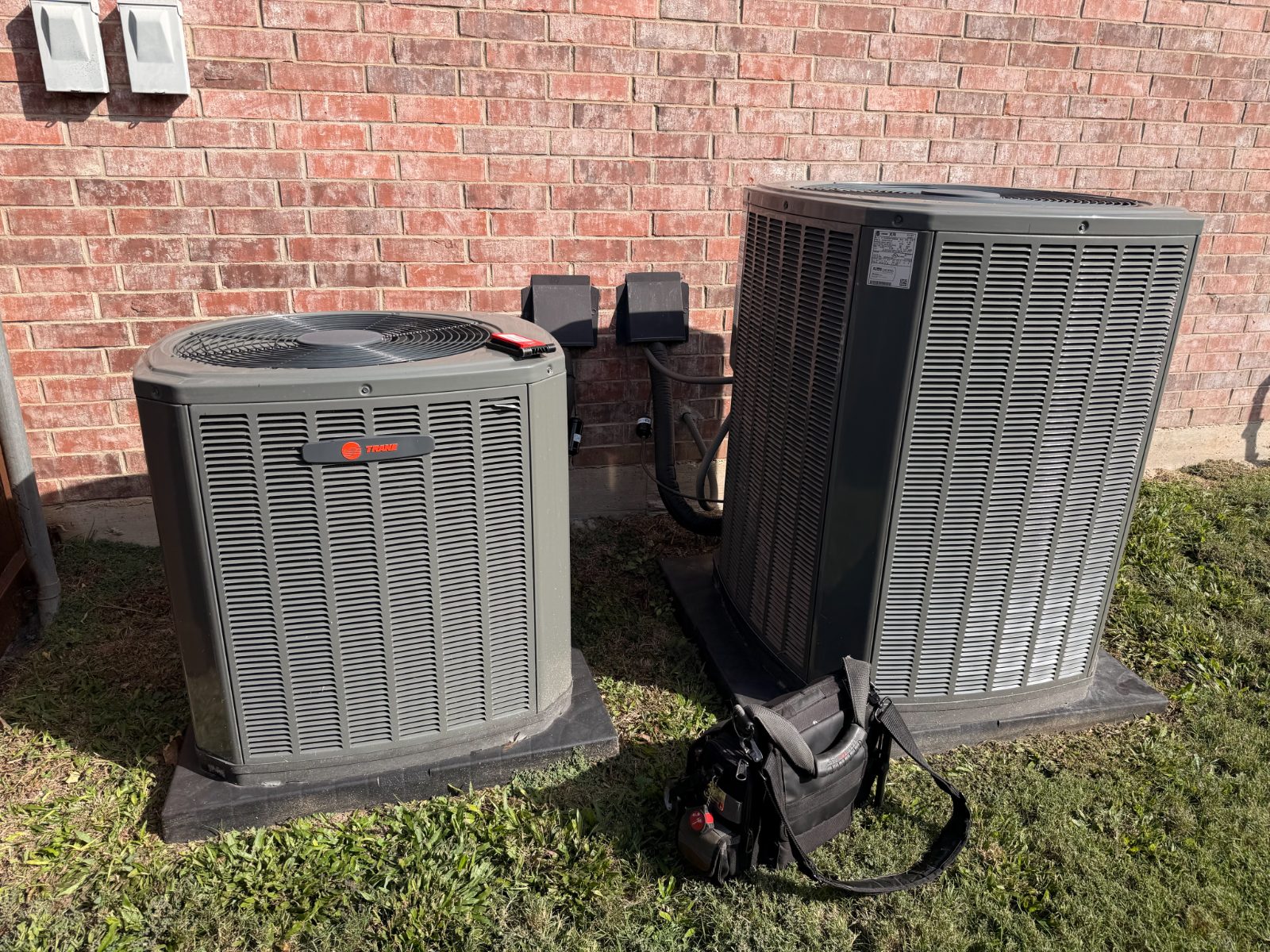
Every fall, once that first cold front rolls through DFW, our phones start ringing with the same question: "Should I get a heat pump or a furnace?"
It's a fair question. North Texas winters are weird. One week it's 75 degrees and you're in shorts, the next week there's ice on your windshield and the whole Metroplex is shut down. So the "right" heating system here isn't the same as it would be in Minnesota or Florida.
I've been working on HVAC systems around here for years, so let me break it down the way I'd explain it to a neighbor over the fence.
First, What's the Difference?
A furnace makes heat. Most furnaces in North Texas burn natural gas (some are electric). It burns fuel, warms the air, and the blower pushes it through your ducts. Simple and powerful.
A heat pump doesn't make heat. It moves it. In the summer it works just like your AC, pulling heat out of your house. In the winter it runs in reverse and pulls heat from the outside air into your home. Yes, even when it feels cold out, there's still heat in that air to grab.
That's the big selling point: one system handles both your cooling and your heating.
How a Heat Pump Handles a North Texas Winter
Here's the honest truth: heat pumps are great for about 90% of our winter.
Most winter days in DFW sit somewhere in the 40s and 50s. In that range, a heat pump is efficient, quiet, and cheap to run. You'll usually notice it on your electric bill in a good way compared to older electric heat.
Where heat pumps struggle is when it gets really cold, think below freezing for days at a time. As the temperature drops, a heat pump has to work harder to pull heat from the outside air. That's when it leans on its backup, called auxiliary heat or "aux heat." On most systems that's electric heat strips, which work fine but cost a lot more to run.
If you've ever looked at your thermostat during a cold snap and seen "AUX HEAT" or "EM HEAT," that's what's going on. Totally normal.
One more thing: you might see your outdoor unit steaming or hear it go quiet for a few minutes. That's the defrost cycle melting ice off the coil. Also normal. If it's covered in solid ice and not clearing up, though, give us a call. (We wrote more about ice problems in Why Is Your AC Freezing Up in Texas?)
How a Furnace Handles a North Texas Winter
A gas furnace doesn't care how cold it is outside. 50 degrees or 15 degrees, it puts out the same strong, hot air. If you grew up with a furnace, you know that "toasty" feeling when it kicks on.
Furnace pros:
- Strong, consistent heat no matter how cold it gets
- Hotter air coming out of the vents
- Natural gas is often cheaper per unit of heat than electric resistance heat
Furnace cons:
- It only heats. You still need a separate AC for our long, hot summers
- Needs a gas line (not every home has one)
- Requires yearly safety checks, including carbon monoxide
What About Winter Storms Like 2021?
Nobody in North Texas has forgotten February 2021. A lot of homeowners asked us afterward which system is "safer" in a storm like that.
The truth is, during a long power outage, neither one will run. Even a gas furnace needs electricity for its blower and controls. So no system is outage-proof on its own.
What does matter is how the system handles extreme cold when the power is on. A gas furnace will keep pumping out heat. A heat pump will lean hard on aux heat, which can be slow to warm the house and expensive.
The Option a Lot of Our Customers Pick: Dual Fuel
Here's the middle ground that makes a ton of sense in North Texas: a dual fuel system (also called a hybrid system).
It pairs a heat pump with a gas furnace. The heat pump handles your cooling all summer and your heating on mild winter days. When it gets really cold, the system automatically switches over to the gas furnace.
You get:
- Efficient heating most of the winter
- Strong furnace heat when an ice storm hits
- One outdoor unit that does your AC too
If you already have gas at your house and you're replacing your system anyway, dual fuel is worth asking about.
So Which One Is Better for You?
Here's my quick, no-nonsense take:
A heat pump is probably a good fit if:
- Your home is all-electric with no gas line
- You want one system for heating and cooling
- You're okay with milder (not blazing hot) heat from the vents
A gas furnace is probably a good fit if:
- You already have natural gas and a working AC
- You like that strong, hot-air feeling
- Somebody in the house is always cold
Dual fuel is probably a good fit if:
- You have gas and you're replacing your whole system
- You want the best efficiency and backup for cold snaps
A Few Questions We Get All the Time
Is a heat pump worth it in Texas? For most North Texas homes, yes. Our winters are mild enough that a heat pump runs efficiently most of the season.
Will a heat pump keep my house warm when it's below freezing? Yes, with help from aux heat. It'll just cost more to run on those days.
How long do heat pumps and furnaces last? With yearly maintenance, a heat pump typically lasts 10 to 15 years and a gas furnace can go 15 to 20 years. Skipping maintenance shortens both.
Still Not Sure? Let's Look at Your Home
Every house is different: size, insulation, ductwork, if you have gas, and how old your current system is. The best way to decide is to have someone actually look at it.
📞 Call us at 4696074241 for a free in-home estimate before the next cold front hits.
Need a hand with this? Call (469) 607-4241 or Book Service. We are open 7 days, 7am to 7pm.